



- Nigerian employers must contribute 10% of the combined basic salary, housing, and transport allowances to PENCOM for each employee, with an additional 1% of total payroll remitted to NSITF for work injury coverage, making accurate allowance component calculation, not just basic salary, one of the most operationally critical compliance requirements when selecting an EOR provider for Nigerian operations.
- EOR pricing in Nigeria ranges from approximately $199 to $1,000 per employee per month, with RemoFirst starting at $199, Gloroots at approximately $299, Remote, Deel, Oyster HR, and Papaya Global at $599, and G-P at $700 to $1,000, with Nigeria's forex restrictions adding operational complexity to USD-billed EOR fees on top of Naira payroll execution requirements.
- Nigeria's PAYE system is administered at the state level rather than federally, with progressive tax bands ranging from 7% to 24%. The national minimum wage of NGN 70,000 per month is subject to review every three years, meaning companies must confirm their EOR routes' PAYE remittances to the correct state tax board per employee location and actively track minimum wage changes, as both errors carry retroactive financial liability.
Nigeria's NGN 70,000 minimum wage and complex PAYE tax environment are driving foreign companies toward EOR as a practical path to compliant, entity-free hiring.
This guide delivers an expert-backed comparison of the top EOR providers in Nigeria, covering pricing, pension compliance, and key strengths to help you choose the right partner for Nigerian operations.
How we evaluated these providers:
- Customer and buyer interviews
- Review site analysis (G2, Capterra ratings)
- Hands-on platform testing
Gloroots is included in this comparison. We are a provider in this space. This list reflects independent research. No paid placements or rankings influence the selection or ordering of providers in this guide.
What Is an EOR in Nigeria?
An Employer of Record in Nigeria is a third-party legal employer that assumes compliance responsibility under the Nigeria Labour Act, pension regulations, social insurance requirements, and state-level PAYE tax obligations on behalf of a client company.
An EOR enables companies to hire in Nigeria without incorporating through the Corporate Affairs Commission, a process that typically takes three to six months, using the provider's existing Nigerian legal entity instead.
Core EOR responsibilities:
- Managing payroll
- Handling taxes
- Employment contracts
- Statutory benefits
- Compliance reporting
Startups, scaleups, and enterprises hiring Nigerian talent in technology and financial services use EOR to access Lagos and national talent pools without local entity overhead.
Detailed Comparison of Best EOR Service Providers in Nigeria [2026]
Who Are the Best EOR Service Providers in Nigeria?
1. Gloroots
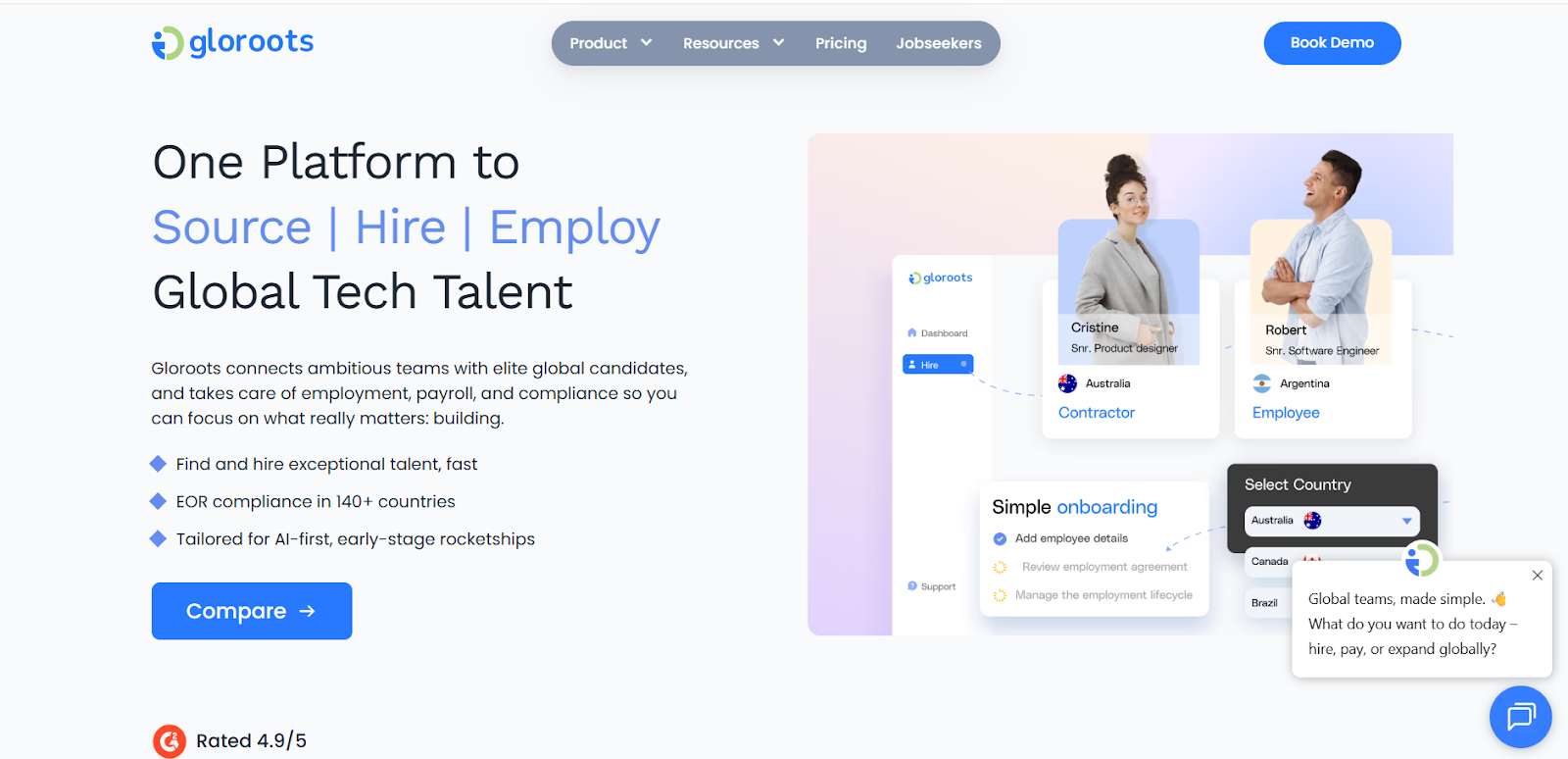
Gloroots is a global hiring and employment platform covering 140+ countries, suited for startups and SMBs that need cost-effective, transparent EOR options with strong compliance support for Nigerian operations.
In Nigeria, Gloroots enables companies to manage compliant employment contracts, monthly Naira payroll, PENCOM pension contributions at 10% employer share, and NSITF remittance without entity setup.
Gloroots differentiates through fixed pricing at approximately $299 per employee monthly, contrasting with variable quotes and opaque billing from most traditional EOR providers.
Key Features:
- Centralized contracts, payroll, and benefits management on one platform gives HR teams a single system for all Nigerian employment operations.
- Detailed invoice breakdowns give Finance teams complete visibility into Nigerian payroll, statutory contributions, and compliance filing costs each month.
- Contractor management available at $29 per month allows companies to manage both full-time Nigerian employees and contractors from the same platform.
- Coverage across 140+ countries gives companies a consistent employment model for Nigeria within a global platform supporting future market expansion.
- Predictable country-specific pricing with no hidden fees gives Finance teams reliable Nigerian employment cost forecasting from the point of engagement.
Customer Review
Reviewers note Gloroots provides transactions with minimal effort and delivers complete assurance that employment operations remain fully compliant across global markets.
Pros:
- Pricing at approximately $299 per employee per month sits competitively against providers charging $599 or more for Nigerian EOR services.
- Transparent fixed fees with no hidden costs give Finance teams reliable Nigerian employment cost forecasting without unexpected billing adjustments after engagement.
- A centralized platform for contracts, payroll, and compliance reduces administrative overhead for lean HR teams managing Nigerian employment operations.
Cons:
- Smaller brand recognition than established providers like Deel or Remote may require additional internal stakeholder education during the procurement process.
- Limited Nigeria-specific public reviews make it more difficult to benchmark local service quality against established competitors at the evaluation stage.
Pricing
Gloroots charges approximately $299 per employee per month for EOR services in Nigeria, with contractor management available at $29 per contractor per month.
Mini Case Study:
A company expanding internationally faced compliance complexity in managing payroll across multiple countries, including Nigeria, with separate vendors for pension, tax, and employment contracts.
Using Gloroots, the company consolidated employment onto one platform, gaining detailed compliance reporting and predictable monthly invoicing across its international workforce.
Hire in Nigeria without opening a local entity
Access top Nigerian talent with Gloroots EOR while we manage local labor laws, CBAs, social contributions, and benefits.
{{hiring-power="/components"}}
2. RemoFirst

RemoFirst is a budget-focused EOR covering 185+ countries, suited for startups and SMBs that need low-cost Nigerian employment with customizable onboarding and no minimum seat requirements.
In Nigeria, RemoFirst manages payroll, PAYE withholding, pension contributions, NSITF remittance, and employment contracts through a self-service platform with multi-currency billing support.
RemoFirst differentiates through its $199 starting price with no minimum seat commitments, offering a cost-accessible path to compliant Nigerian employment for first-time hirers.
Key Features:
- Multi-currency billing support gives companies the flexibility to pay RemoFirst fees in their preferred currency while Nigerian employees receive Naira payroll.
- Benefits setup and management covers statutory pension contributions and optional health coverage for Nigerian employees within the base EOR platform.
- 24/5 dedicated support gives HR teams direct access to Nigeria compliance guidance for PAYE, PENCOM, and NSITF remittance requirements.
- Customizable onboarding workflows allow companies to configure Nigerian employment activation based on specific roles, location, and compensation requirements.
- Budget pricing at $199 to $349 per employee per month provides cost-accessible Nigerian EOR for startups managing limited hiring budgets.
Customer Review
Reviewers highlight that RemoFirst delivers the lowest cost available without compromising on Nigerian compliance execution or statutory filing accuracy.
Pros:
- Affordable pricing at $199 to $349 per employee per month gives startups a cost-accessible Nigeria EOR entry point without long-term volume commitments.
- Quick Nigerian employment setup reduces time-to-productivity for tech companies hiring Lagos-based engineers without CAC registration delays.
Cons:
- Interface learning curve noted in reviews may slow initial platform adoption for HR teams without prior experience using self-service EOR tools.
Pricing
RemoFirst charges $199 to $349 per employee per month for EOR services in Nigeria, depending on service scope and configuration.
3. Remote
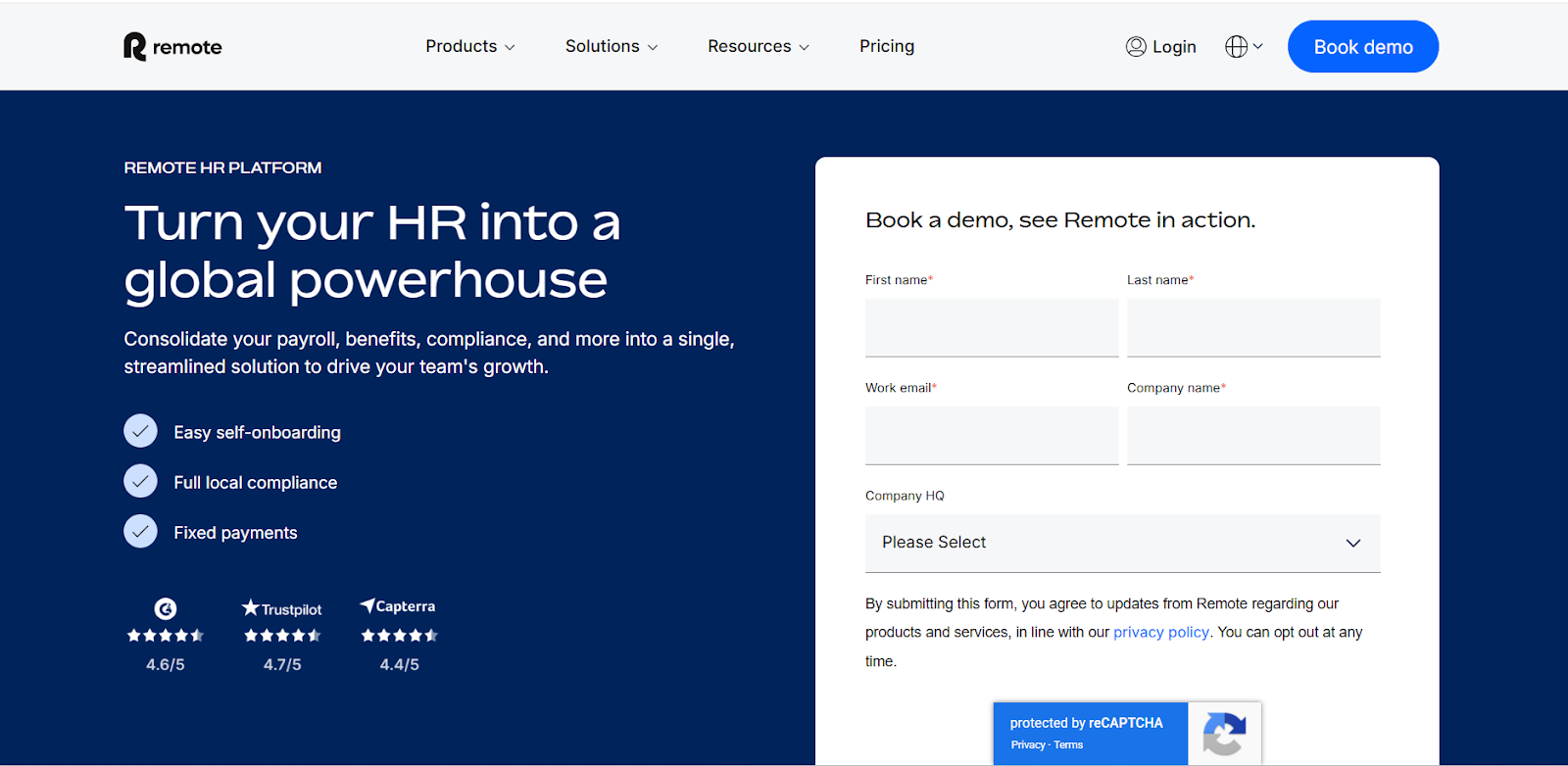
Remote is a remote-first EOR covering 100+ countries, suited for companies that need quick Nigerian employment activation, built-in insurance coverage, and equity management for distributed teams.
In Nigeria, Remote manages employment contracts, monthly Naira payroll, insurance coverage, and compliance filings for companies hiring without a local CAC-registered entity.
Remote differentiates through its straightforward onboarding process, equity management tools, and a platform designed specifically for remote-first workforce operations in markets including Nigeria.
Key Features:
- Equity management tools allow companies to administer stock options for Nigerian employees within the Remote platform without separate equity administration vendors.
- Responsive local compliance experts give HR teams direct access to Nigeria-specific guidance on PAYE zones, PENCOM remittance, and Labour Act requirements.
- Insurance coverage included in Nigerian employment packages gives employees benefit protection beyond the statutory pension and NSITF requirements.
- Employment contract management covers Nigerian Labour Act requirements, including probation periods of three to six months, notice obligations, and pro-rata annual leave.
- Quick onboarding process reduces Nigerian employment activation time for companies entering the Lagos tech market without local entity setup delays.
Customer Review
Reviewers note that Remote delivers clear, accurate payroll management for Nigerian workers with consistent statutory compliance execution across monthly pay cycles.
Pros:
- Fast employment activation turnaround gives companies a quick path to compliant Nigerian hiring without CAC registration delays or extended setup timelines.
Cons:
- Pricing at $599 per employee per month places Remote at the higher end of the Nigerian EOR market for growth-stage companies with limited budgets.
Pricing
Remote charges $599 per employee per month for EOR services in Nigeria.
4. Deel
Deel is a flexible global HR platform covering 150+ countries, suited for companies that need customized Nigerian payroll management, equity administration, and integrated employment operations.
In Nigeria, Deel manages payroll, employment onboarding, statutory compliance, PAYE withholding, and pension contributions through a platform with dedicated local compliance expertise.
Deel differentiates through its customized payroll capabilities, equity administration tools, and a platform designed for flexible Nigerian workforce management across multiple engagement types.
Key Features:
- Customized payroll management handles Nigeria's PAYE tax bands from 7% at lower income levels to 24% above NGN 3.2 million annually, ensuring accurate withholding for each employee.
- Equity and benefits administration allows companies to offer Nigerian employees stock options and supplementary benefits within the Deel platform.
- Local compliance experts give HR teams Nigeria-specific guidance on PENCOM pension, NSITF remittance, and state-level tax board requirements.
- Employment onboarding covers Nigerian Labour Act requirements, including written contracts, probation terms, and statutory leave entitlements.
- Platform flexibility supports multiple Nigerian workforce types, from direct full-time employment to contractor management within a single operating system.
Customer Review
Reviewers note that Deel provides responsive local compliance experts for Nigerian operations, giving HR teams direct access to PAYE and pension guidance.
Pros:
- Flexible payroll management handles Nigeria's state-level PAYE complexity and multi-zone tax board remittance requirements without requiring manual HR intervention.
Cons:
- Pricing at $599 per employee per month creates cost barriers for smaller companies, making initial Nigerian hires with limited EOR budgets.
Pricing
Deel charges $599 per employee per month for EOR services in Nigeria.
5. Rippling
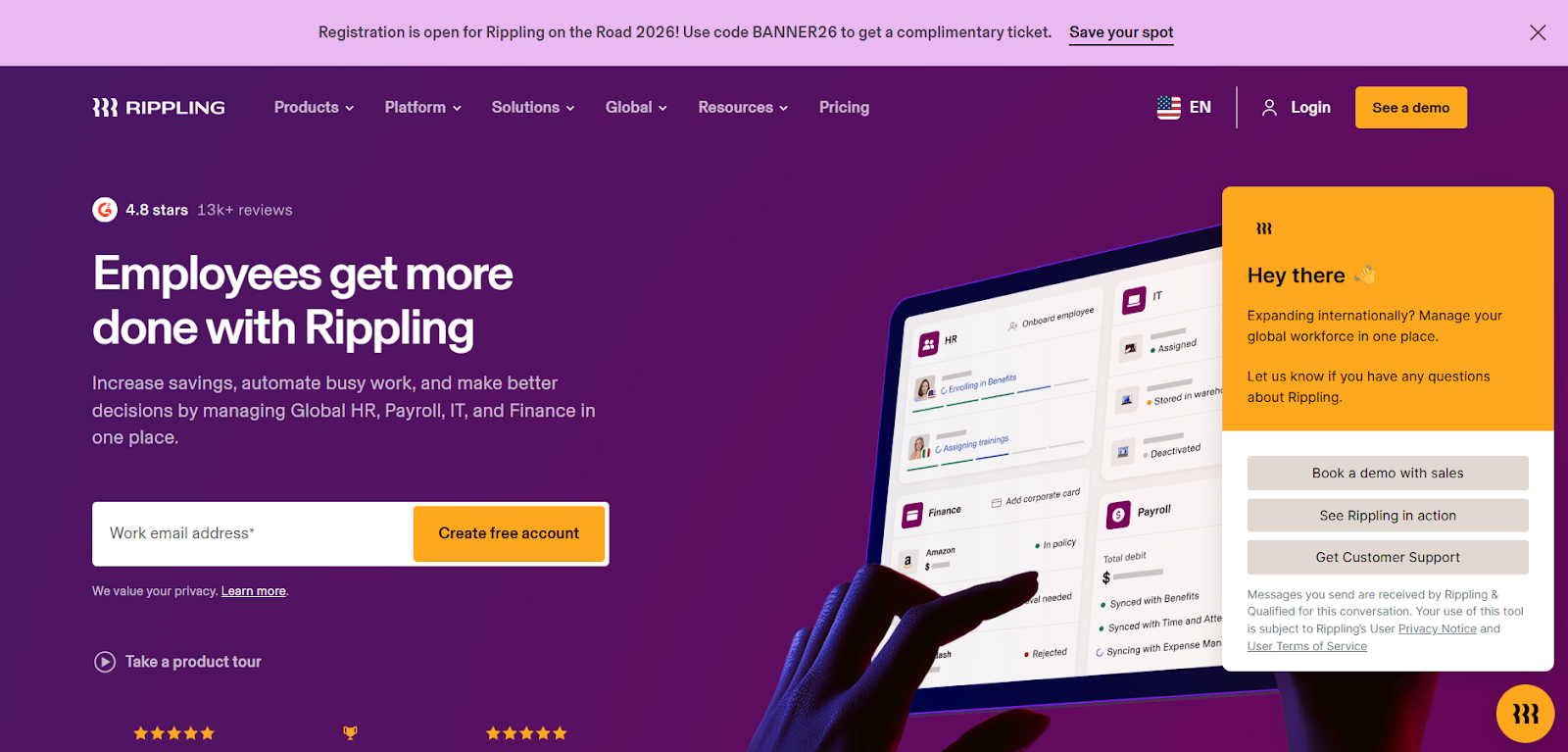
Rippling is a combined HR suite and EOR platform, suited for companies that need payroll, HR administration, device management, and Nigerian employment operations integrated into a single system.
In Nigeria, Rippling enables companies to manage employment onboarding and payroll through a fully integrated HR platform with end-to-end workflow management for distributed teams.
Rippling differentiates through its full HR suite integration, combining EOR employment management with HRIS, payroll, and IT capabilities in a single connected platform.
Key Features:
- End-to-end HR integration connects Nigerian payroll, employment contracts, and workforce management in one platform, reducing vendor fragmentation for lean HR teams.
- Integrated onboarding workflows give companies a structured Nigerian employment activation process from offer issuance through first payroll cycle execution.
- Platform-wide HR suite gives Finance and HR teams consolidated visibility into Nigerian employment costs, headcount, and compliance status within a single dashboard.
- Scalable architecture supports companies growing Nigerian headcounts in technology and financial services without switching platforms as operational complexity increases.
- HRIS and EOR combination gives Operations leads a single system for Nigerian employment governance without managing separate payroll and HR tool vendors.
Customer Review
Reviewers identify Rippling as the preferred choice for companies with full HR suite requirements, citing its integrated platform as a key differentiator for Nigerian operations.
Pros:
- An integrated HR suite gives companies a single platform for Nigerian payroll, employment contracts, device management, and workforce governance without additional vendors.
Cons:
- Nigeria-specific pricing is not publicly available, requiring direct engagement before comparing Rippling's cost against fixed-price EOR alternatives for Nigerian operations.
Pricing
Nigeria-specific pricing for Rippling is not publicly available. Direct engagement with the provider is required for pricing and service scope confirmation.
6. Multiplier
Multiplier is a compliance-focused EOR covering 150+ countries, suited for companies with a strong Africa expansion focus that need contractor and employee management for Nigerian operations.
In Nigeria, Multiplier enables companies to manage both contractor and full-time employee arrangements, with compliance tools designed for the African market's regulatory requirements.
Multiplier differentiates through its Africa compliance expertise, combined contractor and employee management model, and a platform designed for companies scaling across African markets.
Key Features:
- Africa-focused compliance tools give companies Nigeria-specific guidance on Labour Act requirements, PENCOM pension, and NSITF obligations without generic global EOR frameworks.
- Contractor and full-time employee management on one platform gives companies flexibility as Nigerian workforce structures evolve from project-based engagements to direct employment.
- Compliance automation manages Nigerian statutory deductions, tax remittance, and monthly filing requirements within a centralized platform framework.
- Coverage across 150+ countries gives companies a consistent employment model for Nigeria within a platform supporting broader African and international expansion.
- Combined workforce model reduces misclassification risk for companies managing a mix of Nigerian contractors and full-time employees across multiple engagement types.
Customer Review
Reviewers position Multiplier as a top choice for Africa compliance requirements, citing its regional expertise as a differentiator for Nigerian employment operations.
Pros:
- Africa compliance expertise gives companies a Nigerian EOR partner with regional knowledge of PENCOM, NSITF, and state-level PAYE requirements beyond generic global frameworks.
Cons:
- No specific cons were identified in the available research for Multiplier's Nigeria EOR operations. Direct evaluation is recommended before engagement.
Pricing
Nigeria-specific pricing for Multiplier is not publicly available. Direct engagement with the provider is required for pricing and service scope confirmation.
7. Horizons
Horizons is a global EOR covering 185+ countries, suited for small and medium businesses that need Nigerian employment support with dedicated account management and a cost-conscious service model.
In Nigeria, Horizons enables companies to hire without a local entity, managing employment contracts, payroll, and statutory compliance through a dedicated account management model.
Horizons differentiates through its cost-effective positioning for smaller businesses, dedicated account management, and broad 185+ country coverage for companies managing Nigeria within a multi-market strategy.
Key Features:
- Dedicated account management gives HR teams a named point of contact for Nigeria compliance guidance, statutory filing timelines, and employment contract management.
- Coverage across 185+ countries allows companies to manage Nigerian employment within the same platform used for other African and international expansion operations.
- Cost-effective positioning for smaller businesses reduces entry barriers for companies making initial Nigerian hires without large EOR budget allocations.
- Nigerian employment support covers statutory compliance requirements, including PENCOM pension, NSITF contributions, PAYE withholding, and Labour Act contract obligations.
- Global hiring infrastructure supports companies entering Nigeria for the first time without requiring prior in-country compliance or legal entity experience.
Customer Review
No Nigeria-specific public customer reviews for Horizons were found in the available research. Direct reference checks with existing clients are recommended before engagement.
Pros:
- Coverage across 185+ countries provides consistent employment management for Nigeria within a platform built for multi-country African and global workforce expansion.
Cons:
- A custom pricing model means cost transparency is limited at the evaluation stage, requiring direct engagement before comparing Horizons against fixed-price EOR alternatives.
Pricing
Horizons operates on custom pricing for Nigerian EOR services. Direct contact with the provider is required for pricing and service scope confirmation.
8. Oyster HR
Oyster HR is a remote-focused EOR covering 180+ countries, suited for companies that prioritize consistent benefits delivery and remote culture alignment for Nigerian employment operations.
In Nigeria, Oyster HR enables companies to manage compliant employment, statutory benefits, and compliance filings through a platform built for remote-first workforce operations.
Oyster HR differentiates through its remote culture focus, consistent global benefits framework, and a platform designed for companies building remote teams across emerging markets, including Nigeria.
Key Features:
- Consistent benefits delivery gives Nigerian employees standardized coverage across statutory and optional benefits within a globally aligned benefits administration framework.
- Remote-first platform design supports companies where Nigerian employees work outside traditional office structures, aligned with distributed workforce operations.
- Employment contract management covers Nigerian Labour Act requirements, including probation, notice obligations, and statutory leave entitlements aligned to local law.
- Coverage across 180+ countries gives companies a consistent employment model for Nigeria within a platform supporting distributed workforce operations at scale.
- PENCOM pension and NSITF contribution management ensure accurate statutory remittance for Nigerian employees within Oyster's compliance framework.
Customer Review
No Nigeria-specific public customer reviews for Oyster HR were found in the available research. Evaluation using Oyster's general G2 profile is recommended before selection.
Pros:
- Remote-first platform expertise supports companies managing Nigerian remote teams without the operational overhead of traditional office-based employment models.
Cons:
- Pricing at $599 per employee per month may create cost barriers for smaller companies making initial Nigerian hires, particularly given Nigeria's forex variability, adding to the total cost.
Pricing
Oyster HR charges $599 per employee per month for EOR services in Nigeria.
9. G-P (Globalization Partners)
G-P is an enterprise-focused EOR covering 180+ countries, suited for large organizations that need structured compliance governance, audit support, and established Nigerian employment infrastructure.
In Nigeria, G-P enables enterprises to manage compliant employment through a partner network model, covering PENCOM pension, NSITF, PAYE, and Labour Act contract requirements.
G-P differentiates through its enterprise-grade compliance infrastructure, structured governance model, and audit support capabilities for large organizations managing Nigerian employment at scale.
Key Features:
- Audit support capabilities give enterprise Legal and Finance teams structured documentation for Nigerian employment compliance, pension remittance, and statutory filing governance.
- Enterprise compliance infrastructure covers Nigerian employer obligations including PENCOM at 10% of applicable allowances, NSITF at 1% of total payroll, and PAYE withholding.
- Risk reduction focus gives large organizations structured governance for Nigerian employment operations within a formal multi-country compliance framework.
- Partner network across 180+ countries supports Nigerian employment execution with established local compliance processes for Labour Act and social insurance obligations.
- Structured enterprise support gives large organizations dedicated guidance for complex Nigerian workforce management without relying on generalist global EOR frameworks.
Customer Review
G-P is consistently identified as the preferred enterprise EOR pick by independent analysts for its global coverage, structured compliance infrastructure, and audit support capabilities.
Pros:
- Audit support and enterprise compliance infrastructure reduce governance risk for large organizations managing Nigerian employment within formal legal and Finance accountability frameworks.
Cons:
- Pricing at $700 to $1,000 per employee per month places G-P at the highest cost tier in this comparison, limiting suitability for growth-stage companies with budget constraints.
Pricing
G-P charges $700 to $1,000 per employee per month for EOR services in Nigeria, reflecting its enterprise compliance and governance platform positioning.
10. Papaya Global
Papaya Global is a payroll-centric EOR covering 160+ countries, suited for enterprises that need AI-driven payroll automation and advanced analytics for complex Nigerian and international workforce operations.
In Nigeria, Papaya Global enables enterprises to manage compliant payroll, PAYE withholding, statutory contributions, and employment contracts through an AI-driven analytics platform.
Papaya Global differentiates through its payroll automation capabilities, advanced workforce analytics, and an enterprise-grade platform built for complex global payroll execution at scale.
Key Features:
- AI-driven payroll automation reduces manual processing overhead for Nigerian PAYE withholding, PENCOM pension contributions, and NSITF remittance at enterprise scale.
- Advanced analytics give Finance and HR teams detailed visibility into Nigerian employment costs, payroll trends, and workforce data within a centralized reporting framework.
- Enterprise-scale compliance infrastructure supports organizations managing Nigerian employment as part of large multi-country workforce programs with formal governance requirements.
- Coverage across 160+ countries gives enterprises a consistent employment model for Nigeria within a global payroll automation platform built for organizational scale.
- Automation focus reduces manual payroll workload for enterprises managing Nigerian employment alongside large international headcounts without increasing internal HR resources.
Customer Review
No Nigeria-specific public customer reviews for Papaya Global were found in the available research. Evaluation using Papaya's general analyst recognition profile is recommended before selection.
Pros:
- AI-driven payroll automation reduces manual processing overhead for enterprises managing Nigerian PAYE complexity and multi-band tax withholding at scale.
Cons:
- The partner-reliant model means compliance execution depends on third-party partners rather than direct entity ownership in Nigeria, which may affect governance accountability.
Pricing
Papaya Global charges $599 per employee per month for EOR services in Nigeria.
How to Choose the Best EOR Service Provider in Nigeria?
1. PAYE Compliance and Multi-Zone Tax Management
Nigeria's PAYE system applies progressive tax bands from 7% on income up to NGN 300,000 annually to 24% on income above NGN 3.2 million, administered by state-level tax boards rather than a single federal authority. Evaluate whether the EOR manages PAYE remittance to the correct state board for each Nigerian employee's location, as misrouted payments create retroactive tax liability for the employing company.
2. PENCOM Pension and NSITF Contribution Management
Employer PENCOM contributions are 10% of the combined basic salary, housing, and transport allowances for each Nigerian employee, with employee contributions set at 8%. NSITF employer contributions are 1% of total payroll. Confirm the EOR calculates these contributions against the correct allowance components, not just basic salary, as miscalculation compounds over employment tenure.
3. Monthly Naira Payroll and Forex Handling
Nigerian payroll must be processed and paid in Naira, while most EOR providers bill clients in USD. The Central Bank of Nigeria's forex restrictions add operational complexity to this currency gap. Evaluate whether the EOR manages USD-to-Naira conversion reliably within payroll cycles and absorbs forex volatility risk or passes it directly to the client.
4. Employment Contract and Labour Act Compliance
Nigeria's Labour Act requires written employment contracts covering probation periods of three to six months, notice periods of one week to one month, depending on tenure, and pro-rata annual leave. Evaluate whether the EOR issues compliant contracts as standard and tracks minimum wage compliance, as the NGN 70,000 monthly floor is subject to review every three years.
5. Local Support and State-Level Compliance Expertise
Nigeria's federal structure means compliance requirements vary by state, particularly for PAYE remittance and tax board registration. Evaluate whether the EOR provides dedicated local experts with Nigeria-specific knowledge, not just generalist African HR support, and whether 24/7 availability is included for HR teams operating across time zones from the company's home market.
What Are the Factors Affecting EOR Pricing in Nigeria?
1. Local Labor Law Complexity
Nigeria's Labour Act includes termination rules, a minimum wage review cycle of three years, and state-level PAYE variation across tax zones. This regulatory complexity increases compliance monitoring overhead and directly affects EOR service pricing for Nigerian employment operations.
2. Statutory Benefits and Taxes
Employer PENCOM contributions are 10% of applicable allowances, NSITF contributions are 1% of total payroll, and PAYE withholding ranges from 7% to 24% of employee income. These statutory obligations add administration costs to Nigerian EOR operations, reflected in provider monthly pricing.
3. Payroll Frequency and Currency Handling
Monthly Naira payroll must be executed within Nigeria's Central Bank forex restrictions, with EOR fees typically billed in USD. USD-to-Naira exchange rate volatility adds financial and operational complexity that contributes to overall EOR service costs for Nigerian employment.
4. Add-On Services and Support Level
Optional health insurance, equipment provisioning, and equity administration increase EOR fees beyond the base per-employee rate. Higher-touch account management with Nigeria-specific compliance expertise also corresponds to higher monthly pricing across the Nigerian EOR market.
Why Gloroots Is the Best EOR Provider in Nigeria?
Gloroots is best suited for SMBs and growth-stage companies expanding to Nigeria cost-effectively, where predictable pricing and statutory compliance management are critical requirements for lean HR teams.
Gloroots combines approximately $299 per month pricing, transparent fixed fees with no hidden costs, centralized payroll management, and human-led support with retained business context for Nigerian operations.
- Pricing at approximately $299 per employee per month positions Gloroots significantly below providers charging $599 or more for Nigerian EOR services at scale.
- Transparent fixed fees with no hidden costs give Finance teams reliable Nigerian employment cost forecasting without unexpected billing adjustments after engagement begins.
- Coverage across 140+ countries allows companies to manage Nigerian employment within the same platform used for future African and international expansion operations.
Explore how Gloroots can run your Nigerian employment.
Book a demo to see the platform in action.
Frequently Asked Questions About the Best EOR in Nigeria
1. What is an Employer of Record in Nigeria?
An Employer of Record in Nigeria is a third-party organization that acts as the legal employer under the Nigeria Labour Act, managing all statutory compliance obligations.
The EOR handles monthly Naira payroll, progressive PAYE withholding from 7% to 24%, PENCOM pension contributions at 10% employer and 8% employee, NSITF contributions at 1% of total payroll, Labour Act-compliant employment contracts, and pro-rata annual leave without requiring you to incorporate through the CAC.
2. How much does an EOR cost in Nigeria?
EOR pricing in Nigeria ranges from approximately $199 to $1,000 per employee per month, depending on the provider and service scope, excluding salary and statutory contributions.
RemoFirst starts at $199, Gloroots at approximately $299, Remote, Deel, Oyster, and Papaya Global at $599, and G-P at $700 to $1,000. Employer PENCOM contributions of 10% and NSITF at 1% add further to the total employment cost above all base EOR fees.
3. Is using an EOR legal in Nigeria?
Yes, using an Employer of Record is a lawful way to employ workers in Nigeria, provided the EOR operates through a registered Nigerian legal entity and complies with the Labour Act and statutory contribution requirements.
The EOR assumes full legal employer responsibility, managing PENCOM remittance, NSITF filings, PAYE withholding to state boards, written employment contracts, and minimum wage compliance at the current NGN 70,000 monthly floor without requiring client entity registration with the CAC.
4. How does Gloroots compare to other EORs in Nigeria?
Gloroots is priced at approximately $299 per employee per month, competitively positioned against RemoFirst at $199 to $349 and significantly below Remote, Deel, and Oyster at $599 per employee.
Beyond pricing, Gloroots offers transparent fixed fees with no hidden costs, centralized contracts and payroll management, and coverage across 140+ countries. For SMBs prioritizing cost governance and compliance predictability for Nigerian operations, this combination provides a strong alternative to premium-tier EOR platforms.
5. Can an EOR manage payroll and benefits in Nigeria?
Yes, a Nigerian EOR manages the full payroll and statutory benefits function in compliance with the Labour Act, PENCOM regulations, and NSITF requirements.
This includes monthly Naira payroll, PAYE withholding across the 7% to 24% progressive tax bands remitted to state boards, PENCOM employer contributions at 10% of applicable allowances, NSITF contributions at 1% of total payroll, maternity leave of twelve weeks, and employment contracts aligned to Nigerian Labour Act probation and notice requirements.

Ready to take the first step?
Request a demo now and learn how you can focus on building, without worrying for compliance, ever!